It’s Like Mardi Gras on Steroids
When you think of Mardi Gras, you probably picture beads, floats, and parades. Now imagine turning that dial all the way up to 11—more glitter, more drums, more feathers, and more people dancing in the streets.
Welcome to Carnaval in Brazil, where the music never stops, the costumes are jaw-dropping, and the energy is unlike anything you’ve ever experienced.

What Is Carnaval?
Carnaval (yep, that’s the Portuguese spelling) is Brazil’s biggest celebration. Held just before Lent, it’s a blend of European traditions and Afro-Brazilian culture, turning entire cities into nonstop street parties.
And while it’s celebrated across the country, Rio de Janeiro takes the crown with its world-famous Samba Parade. Think of it as Mardi Gras meets Cirque du Soleil—with a whole lot more rhythm.
Costumes: Feathers, Glitter & Fantasy
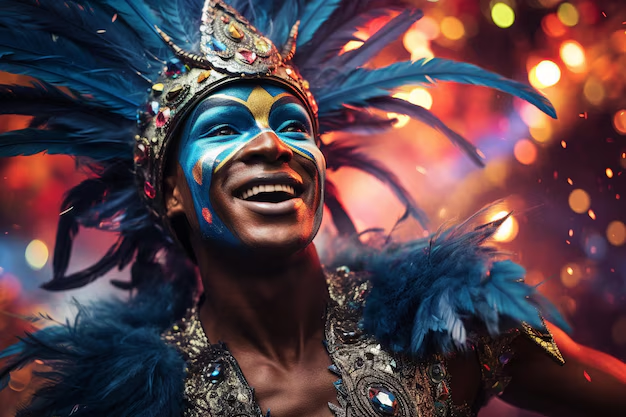
Carnaval costumes are insane in the best way possible.
We’re talking:
- Massive feathered wings
- Rhinestone-covered bodysuits
- Golden helmets and warrior armor
- Outfits inspired by mythology, nature, and history
Each samba school chooses a theme and creates hundreds (even thousands) of custom outfits to match. These aren’t just costumes—they’re wearable masterpieces.

Masks: A Touch of Mystery
While not as traditional as in Venice, masks still play a fun role in Carnaval. You’ll see street partygoers wearing colorful, sparkly masks to add a playful or mysterious vibe.
It’s part of the magic—losing yourself in the celebration.
Samba Schools: Where the Magic Happens
At the heart of Rio’s Carnaval are the samba schools—community groups that prepare all year for one big performance in the Sambadrome, a stadium built just for this event.
Each school tells a story through:
- Giant floats
- Elaborate costumes
- Live percussion bands
- Hundreds of dancers performing synchronized routines
These aren’t just parades. They’re epic battles of art, music, and imagination, judged by a national panel. The top schools become legends.

Carnaval for Kids? Oh Yeah.
Carnaval isn’t just for adults.
Kids get their own street parties (blocos) with bubbles, foam, and music tailored for families. They dress up as superheroes, princesses, or mini samba dancers.
There are even junior samba schools, where children train in drumming, dancing, and performing. It’s part of Brazilian culture from the very beginning.

The Music: The Beat of the Streets
Samba is the heartbeat of Carnaval.
Driven by drums, whistles, and chanting, the music is fast, loud, and impossible not to dance to. It literally moves through your body.
But you’ll also hear other styles like:
- Axé from Bahia
- Frevo in Recife
- Funk carioca in Rio’s street parties
Whether you’re at a formal parade or a random bloco on a side street, the music keeps flowing.
Final Thoughts: More Than Just a Party
Carnaval is more than a festival. It’s a living, breathing tradition rooted in Brazil’s identity.
It’s about joy. It’s about expression. It’s about community.
So if you’ve ever thought Mardi Gras was wild, wait till you see Carnaval.
It’s Mardi Gras on steroids, and you’ll never forget it.


